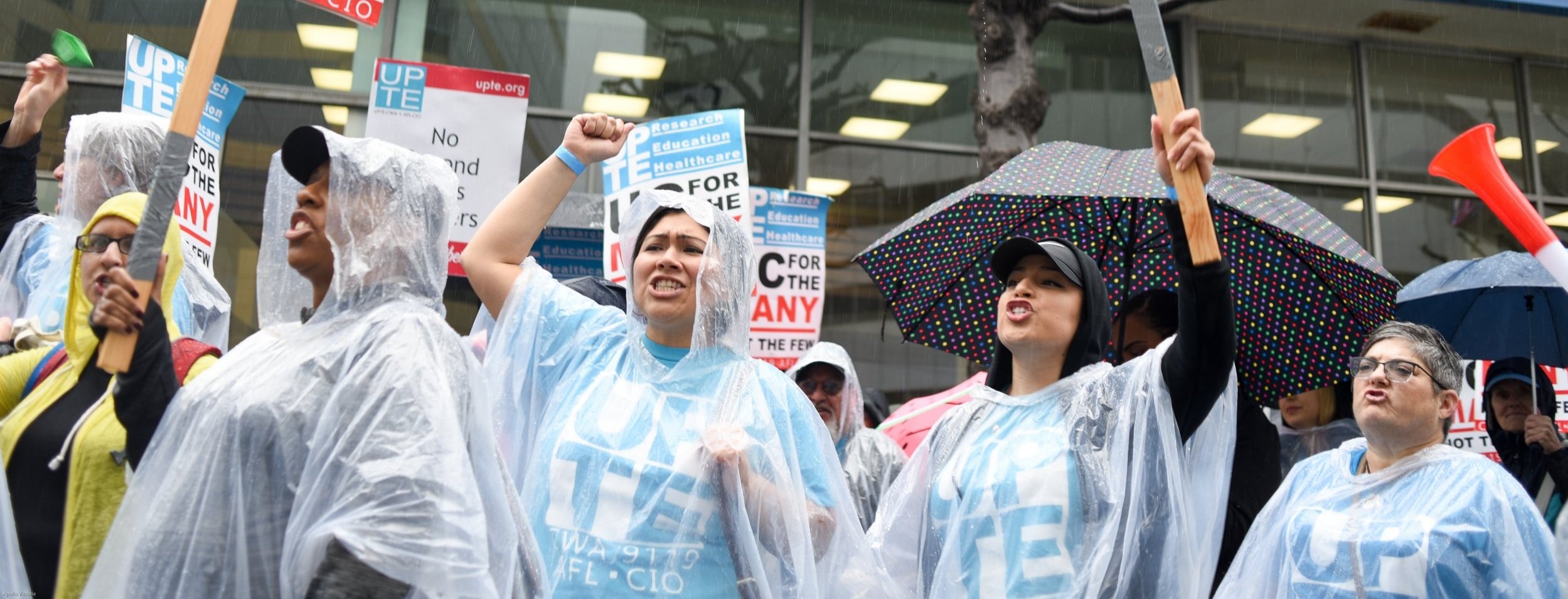
UPTE Demands Safety & Transparency

Recently, an UPTE member was stabbed and killed while working at Zuckerberg San Francisco General Hospital and Trauma Center (ZSFGH) UCSF HIV Clinic at Ward 86. This was a severe workplace violence incident with profound impacts on staff across units. Although the incident occurred at Ward 86, the safety concerns and infrastructure failures implicated UCSF Campus programs operating at San Francisco General Hospital, including outpatient, inpatient, and crisis-response teams.

Workers have repeatedly raised concerns about the absence of basic safety infrastructure, including a lack of metal detectors or equivalent screening procedures, inconsistent security presence, and no standardized protocols for high-risk patients or regular safety huddles. We have also continuously raised concerns about safe staffing levels, as our behavioral health workers play a direct role in risk assessments for our clients. We understand that leadership has indicated safety changes will be implemented. We expect those changes to be concrete, timely, compliant with Cal/OSHA’s workplace violence prevention requirements, and clearly communicated to staff.

We are formally requesting (click each item to see an expanded view of the demand):

    • A clear threat assessment and security plan for all UCSF Campus workplaces where social workers and clinicians provide care — including programs located at San Francisco General Hospital as well as UCSF Campus clinics and offices off hospital grounds where similar safety risks exist.

    • Concrete changes to physical security, such as metal detectors or equivalent screening at patient entrances, controlled access points, functional and tested panic buttons, updated duress systems, and cameras.Clear protocol on limiting access to animals in clinics.

    • A written protocol for identifying and managing high-risk patients and visitors, including criteria for when security or sheriff involvement is required and when services may be limited, paused, or redirected to preserve safety.

    • Immediate institution of medical emergency contingency plans, including providing crash carts and other necessary emergency equipment in all clinics. A review of emergency response times and barriers to providing life-saving care.

    • Defined minimum staffing and security standards for high-risk situations.

    • A clear plan to address the ongoing crisis of recruitment and retention impacting behavioral health workers performing front-line community-based services.

    • Additional behavioral health staff support in-unit for all teams that provide risk assessments as part of their role.

    • Paid administrative leave or equivalent for staff who are directly impacted, traumatized, or who do not feel safe returning while a comprehensive safety plan is still being developed.

    • Clear assurance that no employee will be penalized or required to use their own accruals due to a workplace violence incident.

    • On-site or readily available trauma-informed counseling available within 24 hours, crisis support, and facilitated debriefings within 24 on work time.

    • Options for temporary reassignment, schedule flexibility, or remote or alternative duties for those who do not feel safe returning to the same work area at this time.

    • Regular, scheduled safety meetings or huddles that include frontline behavioral health staff and union representatives, with a clear timeline on implementing proposed mechanisms.

    • Mandatory, paid training on workplace violence prevention, de-escalation, and emergency response for all patient-facing staff.

    • Transparent incident reporting and follow-up processes, including timely communication to staff when serious safety events occur in their areas.

Furthermore, UPTE expects a system-wide security assessment covering every UCSF behavioral health unit, including Hyde Street and Stanyon Hospitals, with immediate, concentrated review and mitigation planning for all campus-based worksites. To ensure transparency and timely action, we request:

  • A joint meeting including hospital leadership, security, risk management, impacted social workers, and union representatives.

  • A written response by Thursday, December 11, 2025, outlining all immediate and planned safety actions, including timelines for implementation.

The above requests reflect concerns that staff have raised over many years, and especially in the aftermath of this incident. The requested changes reflect the needs of staff across units who face similar conditions. Many social workers and clinicians continue to work under conditions similar to those in which this incident occurred, and immediate intervention is required to ensure safety.

Our members have a right to a safe workplace. Asking staff to continue providing care without meaningful, clearly communicated changes after a violent incident of this magnitude is unacceptable. We are committed to working collaboratively on solutions and expect tangible commitments and timelines from hospital leadership.