

Reinstate Veterinary Genetics Laboratory workers & fully restore VGL capacity
UC Davis has laid off five skilled workers from the Veterinary Genetics Laboratory, threatening timely genetic testing that protects California’s food supply, animal welfare, and vital research. Email Dr. Mark Stetter, dean of the University of California, Davis, School of Veterinary Medicine, and demand that these workers be reinstated and the lab fully staffed.
-
UC Davis recently laid off five experienced staff members from the Veterinary Genetics Laboratory (VGL)—the lab that provides critical genetic testing for livestock and research animals. VGL is a non-profit, self-supporting unit of the School of Veterinary Medicine at the University of California, Davis.
These workers were walked off the job by management, stripping the lab of key expertise just as testing demand is increasing. Already, sample processing is taking up to two months. With fewer staff, turnaround times are expected to worsen—especially as “baby season” brings a surge in new animals needing timely testing.
One of the laid-off workers is a specialist in non-human primate genetics at the California National Primate Research Center (CNPRC). Losing his skills and the skills of his coworkers means slower, less reliable testing when researchers and animal caretakers need it most.
-
The Veterinary Genetics Lab is not just another campus lab—it’s a critical backbone for animal health, food safety, and scientific research in California and beyond.
Protecting our food supply: VGL testing helps ensure livestock are healthy enough to enter the food system, supporting a safe and stable food supply for California families.
Supporting farmers and breeders: VGL completes the genetic testing required to register cattle for sale, nationally and internationally. This work underpins breeding programs and agricultural livelihoods.
Safeguarding animal welfare: The lab’s expertise in parentage verification and diagnostic testing helps prevent inbreeding, detect harmful genetic conditions early, and guide responsible breeding decisions.
Advancing life-saving research:
VGL provides targeted genotyping for genes requested by Principal Investigators, giving researchers precise data to answer urgent scientific questions.
One project, supported by this lab, successfully linked a specific gene to blindness in a research animal colony, opening the door to better treatment and prevention.
Brandon’s work locating archived samples and extracting DNA from long-deceased animals has provided irreplaceable historical genetic data that strengthens current and future research.
When VGL is understaffed, everyone loses: farmers, researchers, animals, and communities who rely on safe food and sound science.
-
We are calling on UC Davis leadership to fully restore staffing at the Veterinary Genetics Lab so it can continue to protect animal health, support research, and maintain a safe food supply.
Here’s what needs to happen:
Reinstate the five laid-off VGL workers immediately.
Restore the lab’s full capacity so it can meet current and upcoming testing demands, especially during baby season.
Protect critical expertise, including specialized skills in non-human primate genetics and long-term genetic recordkeeping.
-
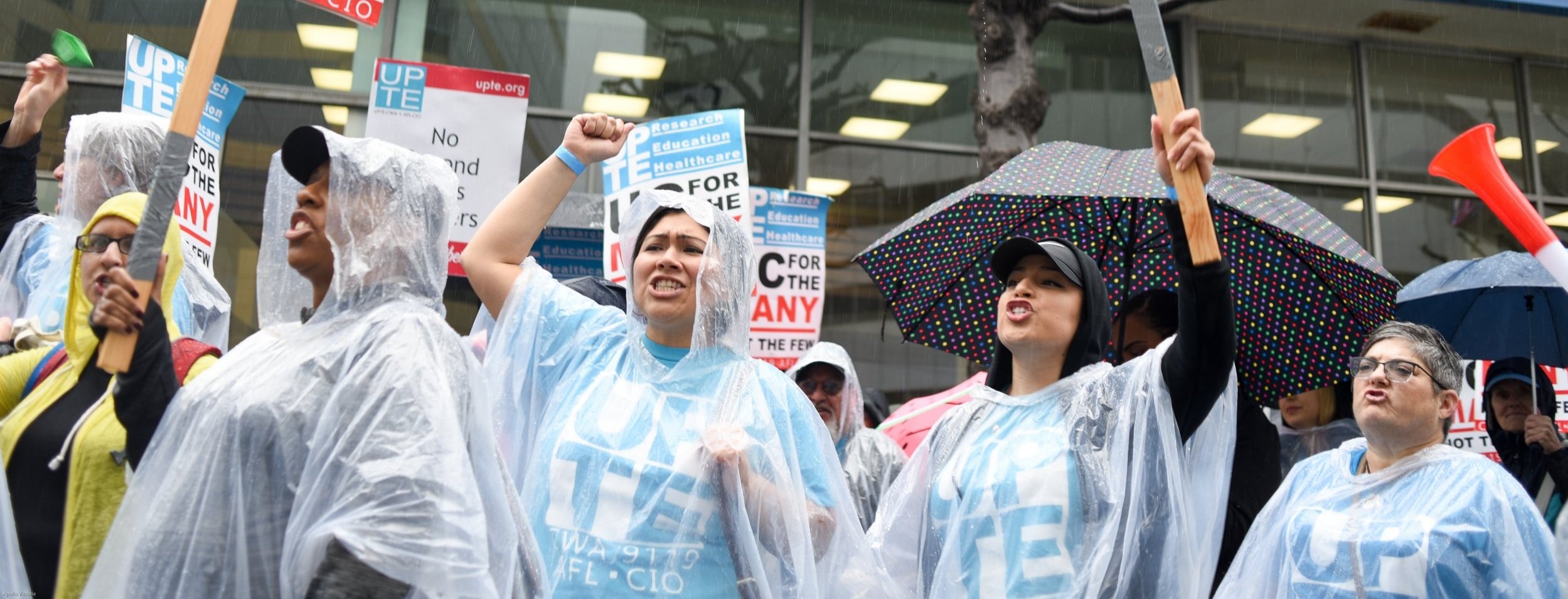
University Professional and Technical Employees CWA Local 9119 (UPTE CWA 9119) is a labor union founded in 1990 by a group of employees who believed that workers across the University of California and at Lawrence Berkeley National Laboratory would benefit from a union to safeguard and expand our rights. In 1993, UPTE members voted to affiliate with the Communications Workers of America (CWA), a 700,000-member union in the American Federation of Labor and Congress of Industrial Organizations (AFL-CIO), the largest federation of unions in the United States, and in the Strategic Organizing Center (SOC), a North American national trade union center.
In 1994, 4,000 UC technical employees voted for UPTE representation. In 1996, 3,700 UC research professionals joined them; in 1997, 2,000 UC healthcare professionals followed suit. UPTE has grown to 23,000 as UC’s Medical Centers have expanded, and we have added new titles to all of our bargaining units.
UPTE contracts also cover part-time, adjunct, and associate faculty, as well as counselors and librarians, at Butte College, College of the Sequoias, and Mt. San Jacinto College.
Take action now: Email Dean Dr. Mark Stetter!
“I’m speaking out because I believe in the mission of the Veterinary Genetics Lab and UC Davis as a whole. I want to make sure the people doing the work — the ones who care deeply about animal health, scientific accuracy, and safety — are treated fairly and supported. Our work has a real impact — not just on research, but also on the animals and owners who depend on accurate, timely results.”
—Brandon Toney
Staff Research Associate 2 (laid off)
UC Davis Veterinary Genetics Laboratory
UPTE Unit Representative
“We aren’t giving up — we’re fighting the layoffs. Our immediate focus is on supporting every worker impacted, and we are demanding transparency and accountability from UC Davis leadership for these decisions. We’re making sure each affected employee has access to representation and clear guidance on their rights.”
—Amy Fletcher
Staff Research Associate 4
UC Davis Robert Mondavi Institute for Wine and Food Science
UPTE Treasurer
UPTE UC Davis Chapter Co-Chair