

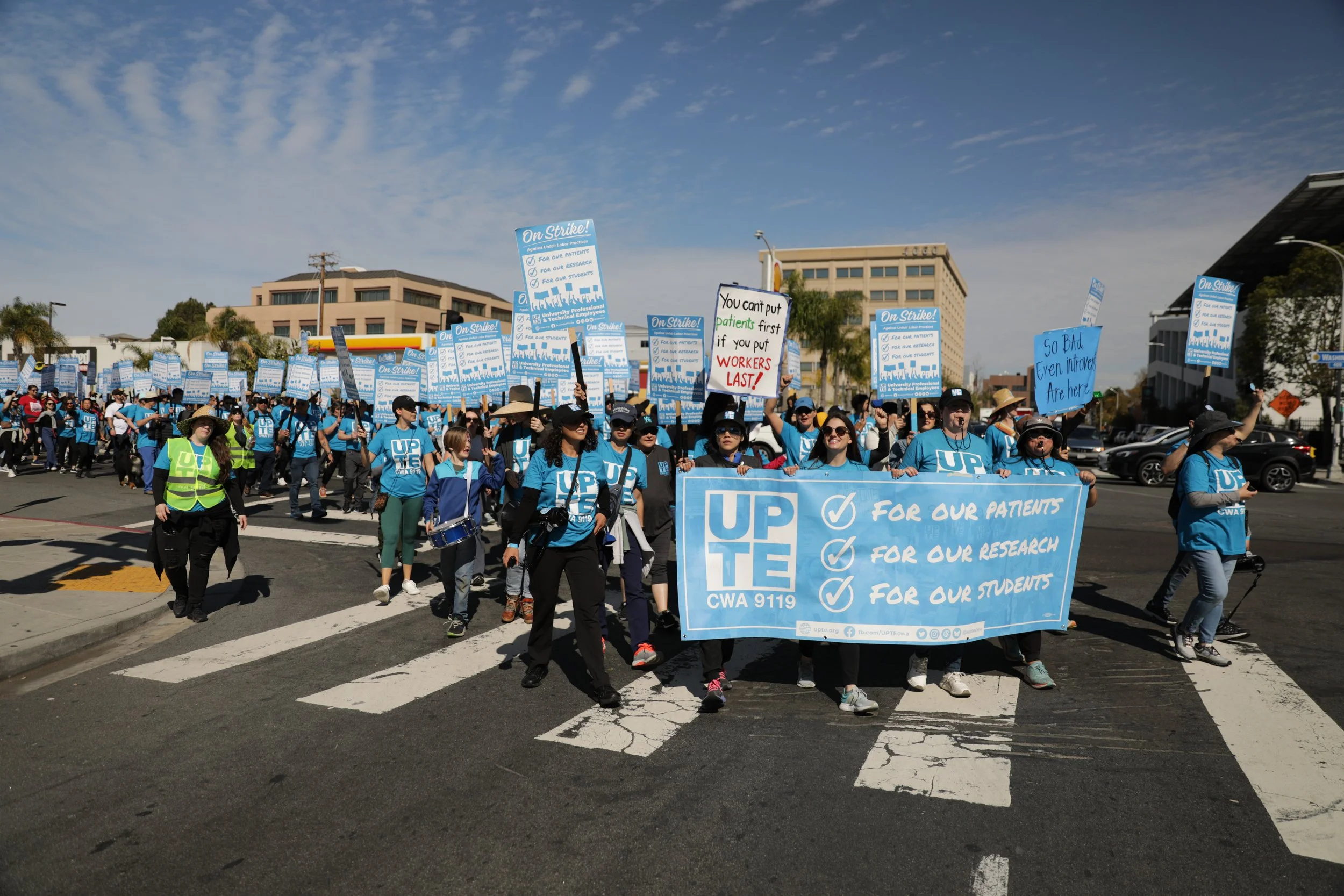
Lawrence Livermore National Laboratory workers vote to affiliate with the Building Trades Council of Alameda County, AFL-CIO
With the one-day online election concluded, Lawrence Livermore National Laboratory employees have voted to change their chapter's affiliation from University Professional and Technical Employees CWA Local 9119 (UPTE CWA 9119) to the Building and Construction Trades Council of Alameda County, AFL-CIO (BTCA).
Now that the vote has concluded, the change in affiliation to the Building and Construction Trades Council of Alameda County (BTCA) will take effect immediately. Throughout this process, your current contract—including wages, hours, and working conditions—remains in full effect, so day-to-day protections remain in place as the changeover progresses.
Just as importantly, your steward structure remains intact, and BTCA and affiliated representatives will coordinate upcoming steward and membership meetings to ensure everyone has clear information, support, and a direct line to ask questions. Thank you to everyone who took the time to participate in the election—your turnout made this decision meaningful.
BTCA will soon reach out to current Lawrence Livermore Lab workers with an introduction, key contacts, and information about upcoming steward and membership meetings. Please keep an eye out for those communications—they will include the next steps in the change of affiliation, who to contact with questions, and how to get connected with your affiliated local moving forward.
Frequently asked questions (FAQs)
The Building and Construction Trades Council of Alameda County, AFL-CIO, wants you, the members of the Lawrence Livermore National Lab Bargaining Unit, to have the best possible information for your upcoming affiliation vote with our council!
This vote will empower you to affiliate with the BTCA and reap the benefits of that affiliation – including primary representation through the BTCA and craft-side representation through one of our 21 local trades affiliates. This affiliation will not only help support you in your respective craft/trade but will also help you win strong collective bargaining agreements that will protect your current wages, hours, and working conditions and build upon them as well in future negotiations.
So how does it all work? Let’s break it down!
-
There are multiple ways that affiliation with BTCA works for you & your bargaining unit:
Primary representation (through BTCA): the Business Representative for the local addresses the day-to-day concerns involving negotiations, contract enforcement, and internal organizing - this is your primary contact beyond your local stewards to help advocate for your labor relations and organizing priorities. The representative is local to Alameda County, works out of the local office, and will dedicate time to the current Livermore office.
Trades representation (through affiliated locals): through your respective local that you will be a direct member of by craft, you will receive specialized support and insight on trades/craft issues that will aid you in a number of areas included, but not limited to, grievances, negotiations, etc.
-
Your current wages, hours, and working conditions, articulated in your collective bargaining agreement, shall stay intact. The transfer of representational responsibilities to the BTCA will begin immediately after the affiliation vote if your bargaining unit chooses to affiliate. Negotiations for a successor agreement will begin in accordance with the contract campaign timeline developed by your bargaining team, including the surveying phase.
-
Your current dues structure will also remain in place, and any initiation fees for the individual locals shall be waived for current bargaining unit members.
-
Your current governance structure will remain intact and will be supported by both BTCA and local affiliates.
-
Your current Steward structure will remain intact and will be supported by both BTCA and local affiliates. Regular steward meetings will be held monthly to ensure consistent contact between the BTCA affiliates and the bargaining unit.
-
Monthly membership meetings will be instituted to ensure direct contact with BTCA/affiliate reps and the bargaining unit. This will help report on the unit’s goings-on and offer members an opportunity to get directly involved.
-
Just a few benefits include:
Access to journeyperson upgrade classes;
Placement on the “out-of-work” list in case of layoff or termination at the lab;
Governmental Affairs/Lobbying support;
State Building Trades support; and
Assistance by experienced craftspeople who have apprentice training and field experience like you.
-
If your bargaining unit chooses to affiliate with the BTCA via the affiliation vote, representational transition will begin immediately. Additionally, steward and membership meetings will be scheduled immediately.
On behalf of the officers, affiliates, and staff, we look forward to welcoming you to the Building and Construction Trades Council of Alameda County!
In solidarity,
Building and Construction Trades Council of Alameda County
Alameda Labor Council
California Federation of Labor Unions
American Federation of Labor and Congress of Industrial Organizations (AFL-CIO)
What’s in our current contract?
-
Previous contract language: Supervisors could work in the bargaining unit in cases of emergencies or short staffing.
UPTE win: The union will be notified if a supervisor works in the bargaining unit for more than fourteen consecutive days. The union can then meet with management to discuss the reason for the extended period and explore options to address short staffing.
-
Previous contract language: Union staff were required to notify Staff Relations at least 24 hours in advance to arrange a visitor badge and follow a process to reserve meeting spaces.
Management’s proposal: Increase the advance notice period for visitor badge requests.
UPTE win:
The union secured an uncleared temporary badge for one union representative, simplifying on-site access.
A clearer process for reserving meeting spaces.
A new union Membership Orientation for new members, allowing them to meet with a shop steward within two weeks of their start date for up to an hour to learn about the union and their contract.
-
Previous contract language: Four designated shop stewards received release time only for grievance handling.
Management's proposal: Eliminate paid release time for all steward duties.
UPTE win:
Increased the number of designated shop stewards to eight.
Granted up to two hours per month for general union duties and grievance handling.
-
Previous contract language: Six-month probation period.
Management’s proposal: Extend probation to one year, with a possible six-month extension (up to 18 months total).
Outcome:
Probation is now set at twelve months with no extension.
Employees will receive written evaluations at the six- and nine-month marks.
-
Previous contract language: Established health and safety committee and outlined protections for refusing unsafe work, personal protective equipment, and safety training.
Outcome: Stronger language protecting bargaining unit employees tasked with taking samples or swipes for environmental safety and health employees.
-
Previous contract language: Outlined employer and state leave policies. Mirrored Lab policies.
Changes: Bargaining unit employees will now follow the Lab employee leave policy directly, with HR handling inquiries. The union retains the right to discuss policy changes with management.
-
Previous contract language: Addressed tuition assistance repayment for employees terminating employment.
Changes: Closed a loophole, allowing smaller repayments. Notably, no former bargaining unit employees had used the loophole.
-
Previous contract language: Outlined prior wage increases.
Management's proposal: 11 percent increase over five years.
UPTE win:
Year 1 (2025): 4.5% increase retroactive to January 1, an additional 3% is for high voltage electricians, heavy equipment mechanics, and locksmiths. A new top step was also created, step 5. Each step is 5%. Everyone should get a step increase on their anniversary date. If you are currently at step 4, you will have to wait until your anniversary to recieve step 5. If you are below step 4, you will move to the next step in your pay scale.
Year 2 (2026): 3.5 percent increase, with an additional 2% for the specified roles.
Year 3 (2027): Four percent increase, with a mid-term wage survey to assess market competitiveness.
Year 4 (2028): Four percent increase.
Year 5 (2029): Four percent increase.
Note to UPTE members: If you believe you are due for a step increase, proactively confirm with your supervisor via email.
-
Previous contract language: Outlined overtime for different schedules (8-hour, 9/80, and 4/10 shifts).
Management's proposal: Remove daily overtime.
UPTE win:
Protected daily overtime.
Secured overtime pay for scheduled days off.
Double time after 8 hours on holidays.
-
Management’s proposal: Shorten the grievance filing timeline.
Outcome:
Protected existing timelines.
Established distinct steps for greater transparency.
-
Management’s proposal: Require arbitration for issues traditionally handled through lawsuits.
Outcome:
Maintained the original arbitration process.
Updated the list of potential arbitrators.
-
Change: The side letter has been removed, as no current flex employees exist.
-
Maintenance of certifications: management will continue covering costs for required licenses, education, and training.
Workplace committees:
Formalized scheduling, agenda-setting, and participation guidelines.
Protected the Health and Safety Committee.
Established a new labor-management committee (LMC) to address non-grievance contract-related issues.
The union will have four members on the LMC.
Davis–Bacon appeals process:
Created an appeals process for employees believing their work should fall under the Davis–Bacon Act of 1931.
UPTE will also get to track outcomes
Appeals can be submitted via https://upte.org/davisbacon or using the email directly in the contract.
-